 Scripps News
Indiana Backroads: A Road Trip Through Small-Town America
September 7, 2026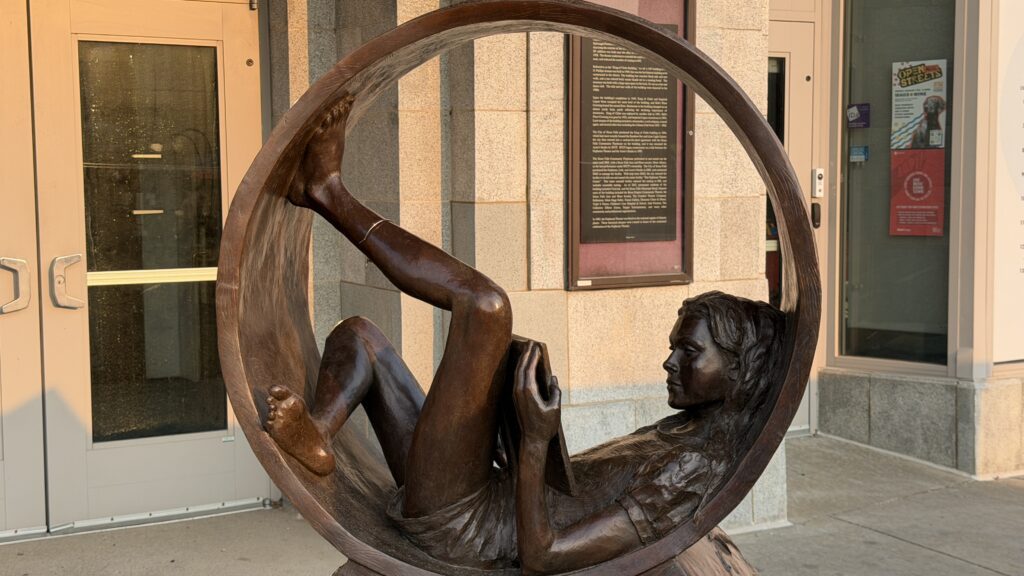
South Dakota’s largest city is more than a stop on the way to Mount Rushmore. Here’s the Photowalks itinerary for seeing Sioux Falls in one day—with waterfalls, public art, historic theaters, gardens and one very gooey grilled-cheese sandwich at a classic local diner.
When most travelers think of South Dakota, they picture Mount Rushmore, the Badlands, Deadwood or the motorcycle rally in Sturgis. Sioux Falls, on the other side of the state, tends to get far less attention.
That’s a mistake.
Sioux Falls is a surprisingly picturesque city built around a waterfall, with a lively downtown, restored theaters, an open-air sculpture gallery and several places that look as if they belong in a much larger city.
If you have only one day, this route covers the essential sights without racing from one “must-see” attraction to another. It also leaves time to walk, look around and come home with better photos.

First, a little Sioux Falls geography
Sioux Falls sits in the southeastern corner of South Dakota, close to both Iowa and Minnesota. It is the state’s largest city, but it is nowhere near the Black Hills.
Mount Rushmore and the Badlands are roughly five hours west. Locals told me that visitors routinely arrive in Sioux Falls and announce that they’re about to “pop over” to Mount Rushmore. That is not a casual side trip. Treat Sioux Falls as its own destination—or as a separate stop at the beginning or end of a longer South Dakota road trip.
8 a.m.: Start where the city began—Falls Park
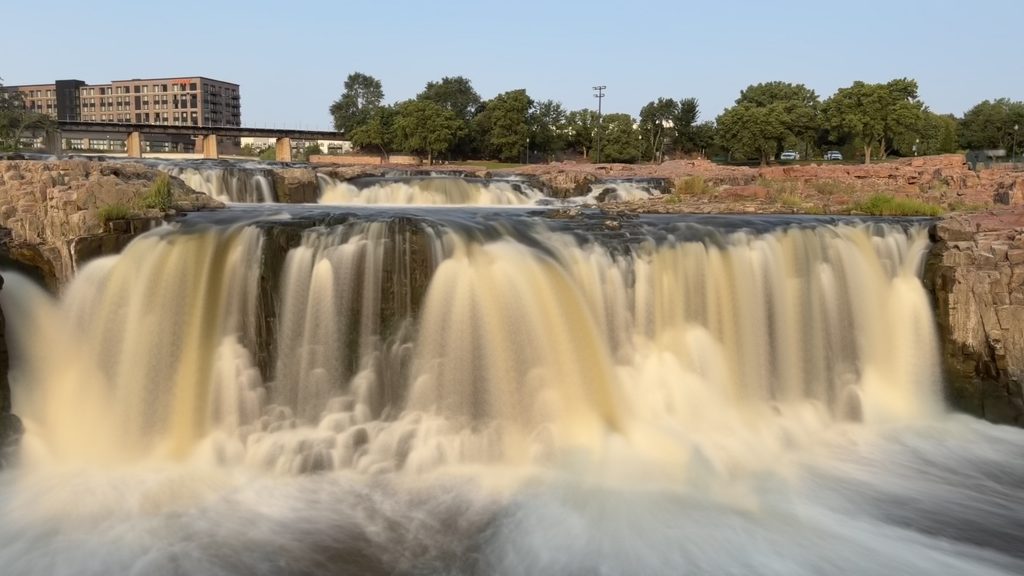
If you see only one place in Sioux Falls, make it Falls Park, just north of downtown at 131 E. Falls Park Drive.
The falls of the Big Sioux River gave the city its name and powered its earliest industries. Today, the 128-acre park has walking paths, historic ruins and several platforms offering very different views of the water.
Don’t stop after taking the first obvious picture. Walk around the park and try the view from each platform. My favorite position was close to the falls, where the spray reaches your face and the rushing water fills the frame. It is also the best place for a selfie—but expect a light sprinkle.
Before leaving, go inside the Falls Park Visitor Information Center and take the elevator to the top of its five-story observation tower. Admission to both the park and tower is free. The tower gives you the wide overhead view—almost like putting a drone in the air without actually flying one.
10 a.m.: Let the “Greetings from Sioux Falls” mural introduce the city
From Falls Park, head toward downtown and the “Greetings from Sioux Falls” mural at 302 N. Phillips Avenue.
Longtime Photowalkers know that I love a good postcard mural. The letters usually work as a visual guide to the city, and this one points visitors toward many of the places on this itinerary: Falls Park, the Cathedral of Saint Joseph, the Arc of Dreams, the Japanese Gardens, McKennan Park and Sioux Falls’ historic theaters.
Photograph the complete mural first. Then get closer and treat each letter as its own composition. You’ll leave with both the postcard shot and a set of details that tell more of the city’s story.
10:30 a.m.: Walk Phillips Avenue and SculptureWalk
Sioux Falls has one of the simplest downtown photowalks you could ask for. Follow Phillips Avenue south from Falls Park toward 12th Street, detouring one block west to Main Avenue when something catches your eye.
SculptureWalk turns downtown into an outdoor gallery, with more than 80 sculptures displayed between Falls Park and the Washington Pavilion. The collection changes, so returning visitors won’t necessarily see the same work twice.
The sculptures begin appearing regularly around Eighth Street and Phillips Avenue. Instead of photographing each work straight on, move around it. Try including the storefronts, pedestrians and historic buildings behind it. Public art is often more interesting when the picture shows how it fits into the city.
Along the way, stop at Urban Archaeology at 126 S. Phillips Avenue. This vintage shop is packed with records, books, furniture, instruments, old television sets, clothes and wonderfully photogenic odds and ends. Check its limited opening days before building the shop into your itinerary.
11:30 a.m.: Photograph the historic theaters
Phillips Avenue is also home to two of the city’s best architectural subjects.
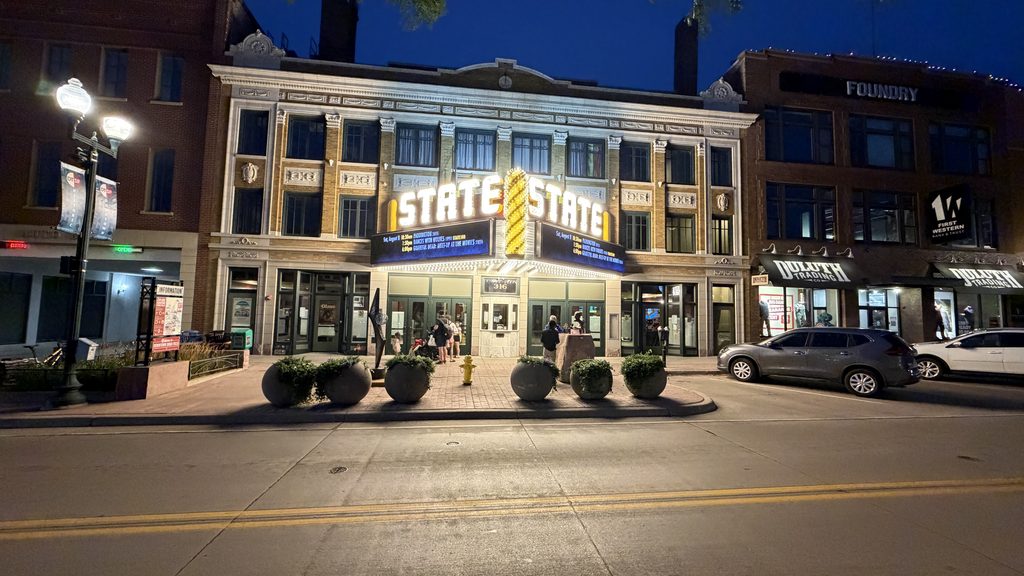
The Orpheum Theater at 315 N. Phillips Avenue opened in 1913 as a vaudeville house. The Sioux Falls State Theatre at 316 S. Phillips Avenue opened in 1926, closed in 1990 and returned to life in December 2020 after a three-decade restoration effort. It now shows repertory films, independent releases and major awards-season movies.
If you enjoy historic architecture, make a quick detour to the Old Courthouse Museum at 200 W. Sixth Street. The restored 1889 quartzite building contains local-history exhibits and original interior murals.
12:30 p.m.: Lunch at the Phillips Avenue Diner
By now it’s time for my favorite kind of road-trip stop: an old-fashioned diner.
The Phillips Avenue Diner at 121 S. Phillips Avenue has the chrome, neon and streetcar look of a classic American diner. I ordered the ultimate grilled-cheese sandwich with sweet-potato fries. It was gooey, cheesy and exactly what I wanted.
The diner is small and does not take reservations, so expect a possible wait during busy hours. The exterior and sign are worth photographing before or after lunch.
2 p.m.: Step inside the Cathedral of Saint Joseph
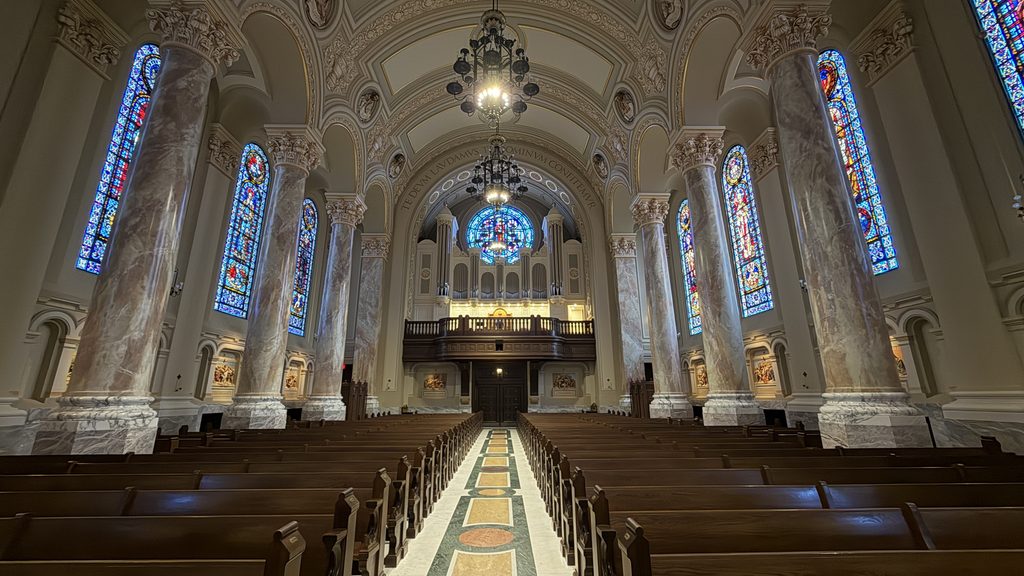
The Cathedral of Saint Joseph, at 521 N. Duluth Avenue, is one of the Midwest’s most impressive churches. Its scale, arches, artwork and warm interior could briefly convince you that you had been transported from the prairie to Rome or Florence.
Large interiors are difficult to photograph with a phone. Walk as far back as possible and begin with the ultra-wide lens. Keep the phone level so the columns don’t appear to tip backward. Then switch to telephoto for the carvings, stained glass and smaller architectural details.
The cathedral is an active place of worship, not simply a tourist attraction. Visit quietly, avoid services and check the current visitor schedule before arriving.
3 p.m.: Visit two very different city gardens
You’ll want a car for the afternoon portion of the itinerary.
Start with the Japanese Gardens at Terrace Park, a calm landscape of stone, water, bridges and greenery. After a morning of waterfalls, storefronts and architecture, it offers a quieter kind of photograph. Look for reflections, repeating patterns and small details rather than trying to squeeze the entire garden into one frame.
Then continue to McKennan Park, known for its central garden, flower garden, pergola and historic bandshell. The flowers naturally lend themselves to close-ups, but try placing the bandshell or another park feature in the background to give the images a sense of place.
If time is tight, choose one garden. Terrace Park is the stronger choice for serenity and reflections; McKennan Park offers more traditional flowers and historic neighborhood atmosphere.
5 p.m.: Take a short drive onto the South Dakota backroads
One of the pleasures of Sioux Falls is how quickly the city gives way to farmland. Within a few miles, you can find cornfields, long empty roads and—in the right season—sunflowers.
There isn’t one required destination here. The point is to leave downtown for a short, unhurried drive and photograph the landscape that surrounds the city. Pull over only where it is legal and safe, stay off private property and remember that sunflower color is seasonal.
Sunset and after dark: Return for the Arc of Dreams
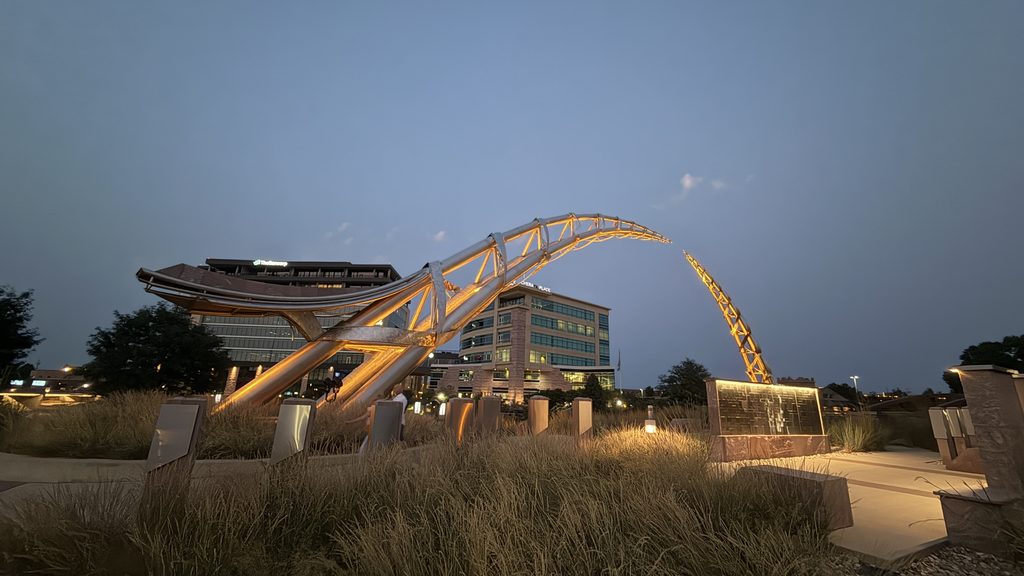
End the day along the Big Sioux River at the Arc of Dreams, the monumental stainless-steel sculpture spanning the river between Sixth and Eighth streets. Artist Dale Claude Lamphere left a 15-foot opening at the center of the arc, 80 feet above the river, to represent the leap of faith required to pursue a dream.
The Arc is impressive during the day, but it becomes a much stronger photograph when illuminated after dark. Use the river and pedestrian walkway as leading lines, and tap the brightest section of the sculpture on your phone screen to keep the highlights from washing out.
If you still have energy, make one final return to Falls Park. Like the Arc of Dreams and the historic theater marquees, the falls take on an entirely different personality at night. This is the larger lesson: timing may be the most important photography tool you have. The same subject can go from ordinary to postcard-worthy simply because you came back when the light was better.

Where we stayed
We stayed at the colorful GLō Best Western Dawley Farms, at 1211 S. Darryl Place. It’s in a quiet area east of downtown, across from farmland and a short drive from the center of the city.
The Sioux Falls itinerary at a glance
- 8 a.m.: Falls Park, the close-up viewing platforms and observation tower
- 10 a.m.: “Greetings from Sioux Falls” mural
- 10:30 a.m.: Phillips Avenue, SculptureWalk and Urban Archaeology
- 11:30 a.m.: Orpheum Theater, State Theatre and optional Old Courthouse Museum
- 12:30 p.m.: Lunch at Phillips Avenue Diner
- 2 p.m.: Cathedral of Saint Joseph
- 3 p.m.: Terrace Park Japanese Gardens and McKennan Park
- 5 p.m.: A short South Dakota backroads drive
- Sunset: Arc of Dreams, followed by an optional return to Falls Park
Sioux Falls isn’t Mount Rushmore, and it doesn’t need to be. Give it a full day and you’ll find a compact, walkable and genuinely photogenic city—one that deserves to be part of the South Dakota conversation.
And for more on the other part of South Dakota that most tourists visit, check out our episode exploring the Badlands, Black Hills, Custer, Deadwood and Mount Rushmore.